


Editors Pick
Latest Article

What are the benefits of working in Singapore?
What are the benefits of working in Singapore?
According to studies, most people working in Singapore are satisfied with the work conditions that Asia's sovereign city-state offers. It ranks top in Asia regarding ease of doing business, quality of living, superior educational standards, professional medical facilities, and low crime rate, among others. The Lion City was rated as one of the world's most competitive economies as per the ranking of the World Economic Forum of 141 countries. It is home to more than 7,000 multinational companies based out of the United States, Europe, and elsewhere.
Moreover, it has high-paying jobs globally, an extremely nominal unemployment rate, worker-friendly conditions, and a favorable climate for developing businesses. Because of its prosperous economy, companies invite migrant workers to Singapore to participate in it. Even traditionally low-paying jobs such as school teachers and waiters earn high salaries in this country. Since it has very low-income tax rates, many skilled workers look to work in Singapore. With a moderate population, a booming economy, and dwindling fertility rates, the Republic of Singapore extends invitations to migrants to work and live there. One of the premier trading centers of the world, not just Asia, it is a magnet for skilled workers.
*Willing to migrate to Singapore? Y-Axisis here to assist you in all the steps.
Most attractive job sectors
Available in Singapore are job opportunities for knowledgeable workers from diverse sectors such as information technology, financial services, and healthcare. Talented workers will not face any dearth of options in this country, a part of ASEAN (Association of Southeast Asian Nations).
*Avail Y-Axis job search services to find jobs in abroad. Y-Axis, the right mentor to unlock cross border opportunities.
Rewarding salaries
The salaries in this southeast Asian country are one of the most attractive in Asia. This, coupled with low taxes, makes it more desirable for talented workers.
Low-income tax rates
Singapore's income tax rate is very low. Non-residents of Singapore are taxed at a flat rate of 15% on their incomes as taxes while they live in Singapore. The income tax for those with a residence permit can be nil if they earn SGD 22,000 per year. On the other hand, those making above SGD 320,000 a year are levied a tax of 20% of their salaries. Moreover, there are no taxes on any foreign earnings imported to Singapore.
Seamless permits for work and residence
If you already have a job offer in hand, it will be a breeze for you when you apply for a work permit, as you would only be a few clicks away from the government website. You will know the result within a day. In addition, the renewal process is simple and easy. You would be issued a residence permit for the same duration as your work permit.
Effortless permanent residency process
If you have lived and have been employed for more than a year in Singapore, you are eligible to apply for a permanent resident card. This, too, can happen quickly and does not involve much paperwork. This whole process can be done entirely online. The permanent residency process can be attained by people quickly if they are aged below 50 and have an impressive educational background (it would help you gain additional points if you have earned one or more degrees from the universities of Singapore). Proficiency in the field you are working in and ability to be fluent in one of the country's four official languages (Mandarin, Malay, Tamil, and English). The time to process a permanent residency may take up to six months.
Educational prospects
If you want to obtain specific skillsets to be in contention for promotion, you can do at any stage of your career by enrolling in one of Singapore's six universities. The National University of Singapore ranked presently at number one in Asia, while it ranks 22 worldwide. It offers degrees in arts, computer science, public policy, medicine, law, etc. You are eligible to apply for a scholarship or government grant, which would bring down your cost of study by up to 50%.
Multicultural population
Although there are residents from all over the world, people from China, India, Malaysia, and Britain make up 60% of the population. English is the primary language of communication, making it easy for people from all over the globe to come and settle here. The local population is also welcoming of foreign persons to allow them to integrate with the local people.
Work ethics
Hierarchy plays a crucial role even in such a cosmopolitan environment. Criticism of bosses or elders on their faces is not tolerated, and neither is aggressive behavior at meetings. As Singaporeans prioritize punctuality, you should make it a point to arrive on time for meetings and perform duties according to their expected timelines. Singapore citizens think it is wise to err on caution and deliberate about an issue before reacting overtly to it.
Social security benefits
Employees contribute mandatorily to the social security system of Singapore every month with a portion of their salaries. Known as the Central Provident Fund (CPF), the scheme has been in place since 1955. These funds cover healthcare, social security, and retirement. Only permanent residents of Singapore will be considered a part of this scheme. If you are part of the scheme, it is mandatory for you and your employers to contribute to the CPF every month. The government will take your donation from your earnings, and your company will pay for your contributions separately.
Maternity and paternity leave
As per the recently introduced government-paid maternity leave (GPML), pregnant ladies in Singapore are now eligible for Government Paid Maternity Benefits (GPMB). They will be paid up to SGD 20,000 ($14,500) for their first two children. They will get up to SGD 40,000 SGD ($29,000) for their third and other children. Mothers not qualified for GPML but who have been employed for at least 90 days in the year before the date of birth of their child could still be eligible. If their child is a resident of Singapore, working fathers, including self-employed people, are eligible for two weeks of Government-Paid Paternity Leave (GPPL). If a newborn is not Singaporean, their fathers will not be eligible for paternity leaves.
Need step-by-step guidance to migrate to Singapore? Y-Axis is here to assist you in all the steps. If you find this interesting, you may go through
Posted on April 26 2024
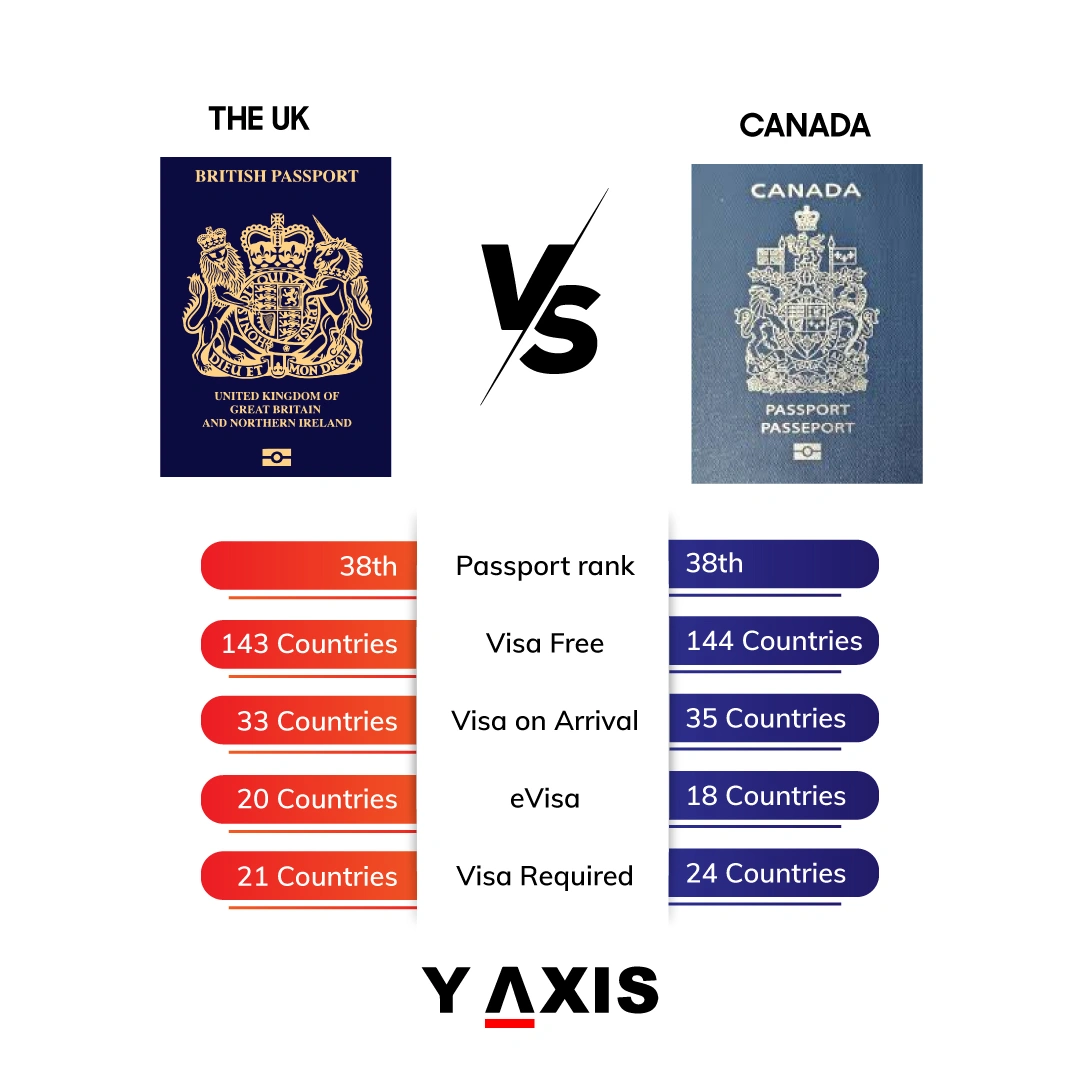
Most powerful passports in the world: The Canada passport vs. The UK passports
Most powerful passports in the world: The Canada passport vs. The UK passports
Highlights of the most powerful passports in the world: Canada passport vs. UK passport
- Canada Passport allows you to visit 145 countries without a Visa.
- Visa on arrival in 38 countries for Canada Passport holders in 2024
- Visit 7 countries with electronic travel authorization (eTA) for owners of Canada Passport in 2024
- Visit 15 countries with Visa Online countries with Canada Passport in 2024
- UK Passport allows you to visit 145 countries without a Visa.
- Visa on arrival for 37 countries for UK Passport holders in 2024.
- Visit 11 countries with electronic travel authorization (eTA) with UK Passport in 2024.
- Visit 15 countries with of Visa Online countries with UK Passport in 2024.
*Do you want to migrate to Canada? Get consultation from Y-Axis for expert guidance.
The Canada passport vs. The UK passport
Here is a list of differences between The Canada passport vs. The UK passport:
|
The Canada Passport vs. The UK Passport |
||
|
Canada |
Factors |
The United Kingdom |
|
38 |
Rank |
28 |
|
145 |
Visa Free |
145 |
|
7 |
eTA |
11 |
|
0 |
Passport Free |
0 |
|
15 |
Visa on Arrival |
37 |
|
15 |
eVisa |
15 |
|
24 |
Visa Required |
21 |
|
5 or 10 years |
Validity |
10 |
|
Immigration, Refugees and Citizenship Canada |
Issued by |
United Kingdom of Great Britain and Northern Island |
|
CAN$120 |
Fee |
£93.50 |
Canadian Passport Rankings
The Henley Passport Index gives the Canadian passport a ranking of 38. The ranking criteria are based on the number of countries you can visit with a Spanish passport. The holder of the Spanish passport can visit 145 countries visa-free and 15 countries with a visa on arrival.
Canada passport free entry for countries in 2024
Here is a list of Canada passport free entry for countries in 2024:
|
List of Canada passport free entry for countries in 2024 |
||||
|
Albania |
Andorra |
Angola |
Anguilla |
Antigua and Barbuda |
|
Argentina |
Armenia |
Aruba |
Austria |
Bahamas |
|
Barbados |
Belarus |
Belgium |
Belize |
Bermuda |
|
Bolivia |
Bonaire, St. Eustatius and Saba |
Bosnia and Herzegovina |
Botswana |
Brazil |
|
British Virgin Islands |
Brunei |
Bulgaria |
Cape Verde |
Cayman Islands |
|
Chile |
China |
Colombia |
Cook Islands |
Costa Rica |
|
Croatia |
Curacao |
Cyprus |
Czech Republic |
Denmark |
|
Dominica |
Dominican Republic |
Ecuador |
El Salvador |
Estonia |
|
Eswatini |
Falkland Islands |
Faroe Islands |
Fiji |
Finland |
|
France |
French Guiana |
French Polynesia |
French West Indies |
Gabon |
|
Gambia |
Georgia |
Germany |
Gibraltar |
Greece |
|
Greenland |
Grenada |
Guam |
Guatemala |
Guyana |
|
Haiti |
Honduras |
Hong Kong |
Hungary |
Iceland |
|
Ireland |
Israel |
Italy |
Jamaica |
Japan |
|
Kazakhstan |
Kiribati |
Kosovo |
Kyrgyzstan |
Latvia |
|
Lesotho |
Liechtenstein |
Lithuania |
Luxembourg |
Macao |
|
Malaysia |
Malta |
Mauritius |
Mayotte |
Mexico |
|
Micronesia |
Moldova |
Monaco |
Mongolia |
Montenegro |
|
Montserrat |
Morocco |
Mozambique |
Namibia |
Netherlands |
|
New Caledonia |
Nicaragua |
North Macedonia |
Northern Mariana Islands |
Norway |
|
Palestinian Territories |
Panama |
Paraguay |
Peru |
Philippines |
|
Poland |
Portugal |
Puerto Rico |
Reunion |
Romania |
|
Rwanda |
Saint Kitts and Nevis |
Saint Lucia |
San Marino |
Sao Tome and Principe |
|
Senegal |
Serbia |
Singapore |
Slovakia |
Slovenia |
|
South Africa |
South Korea |
Spain |
St. Helena |
St. Maarten |
|
St. Pierre and Miquelon |
St. Vincent and the Grenadines |
Suriname |
Sweden |
Switzerland |
|
Taiwan |
Tajikistan |
Thailand |
Trinidad and Tobago |
Tunisia |
|
Turks and Caicos Islands |
Ukraine |
United Arab Emirates |
United Kingdom |
United States of America |
Visa on arrival for Canada Passport holders in 2024
Here is a list of Visa on arrival for Canada Passport holders in 2024:
|
List of Visa on arrival for Canada Passport holders in 2024 |
||||
|
Armenia |
Bahrain |
Bangladesh |
Burkina Faso |
Burundi |
|
Cambodia |
Comoros |
Ethiopia |
Guinea-Bissau |
Indonesia |
|
Iraq |
Jordan |
Kuwait |
Laos |
Lebanon |
|
Madagascar |
Malawi |
Maldives |
Marshall Islands |
Mauritania |
|
Nepal |
Niue |
Oman |
Palau |
Qatar |
|
Samoa |
Saudi Arabia |
Seychelles |
Sierra Leone |
Solomon Islands |
|
Somalia |
Tanzania |
Timor-Leste |
Togo |
Tonga |
List of electronic travel authorization (eTA) countries with Canada Passport in 2024
Here is a list of electronic travel authorization (eTA) countries with Canada Passport in 2024:
|
List of electronic travel authorization (eTA) countries with Canada Passport in 2024 |
||||
|
American Samoa |
Australia |
Kenya |
New Zealand |
Norfolk Island |
|
Pakistan |
Sri Lanka |
|||
List of Visa Online countries with Canada Passport in 2024
Here is a list of Visa Online countries with Canada Passport in 2024:
|
List of Visa Online countries with Canada Passport in 2024 |
||||
|
Azerbaijan |
Benin |
Bhutan |
Congo (Dem. Rep.) |
Côte d’Ivoire (Ivory Coast) |
|
Djibouti |
Equatorial Guinea |
Guinea |
India |
Myanmar |
|
Nigeria |
Papua New Guinea |
South Sudan |
Uganda |
Vietnam |
Countries that require Visa even if you have Canada Passport
Here is a list of countries that require Visa even if you have Canada Passport:
|
List of countries that require Visa even if you have Canada Passport |
||||
|
Afghanistan |
Algeria |
Cameroon |
Central African Republic |
Chad |
|
China |
Congo |
Cuba |
Egypt |
Eritrea |
|
Ghana |
Iran |
Liberia |
Libya |
Mali |
|
Nauru |
Niger |
North Korea |
Russia |
Sudan |
|
Syria |
Turkmenistan |
Venezuela |
Yemen |
|
UK Passport ranking
The UK passport gets a rank of 28 on The Henley Passport Index. The higher the passport rank, the more visa-free countries you can visit. The UK passport allows you to visit 145 countries visa-free.
UK passport free entry countries in 2024
Here is a list of UK passport free entry countries in 2024:
|
List of UK passport free entry countries in 2024 |
||||
|
Albania |
Denmark |
Jamaica |
Northern Mariana Islands |
Slovenia |
|
Andorra |
Dominica |
Japan |
Norway |
South Africa |
|
Angola |
Dominican Republic |
Kazakhstan |
Palestinian Territories |
South Korea |
|
Anguilla |
Ecuador |
Kiribati |
Panama |
Spain |
|
Antigua and Barbuda |
El Salvador |
Kosovo |
Paraguay |
St. Helena |
|
Argentina |
Estonia |
Kyrgyzstan |
Peru |
St. Maarten |
|
Armenia |
Eswatini |
Latvia |
Philippines |
St. Pierre and Miquelon |
|
Aruba |
Falkland Islands |
Lesotho |
Poland |
St. Vincent and the Grenadines |
|
Austria |
Faroe Islands |
Liechtenstein |
Portugal |
Suriname |
|
Bahamas |
Fiji |
Lithuania |
Reunion |
Sweden |
|
Barbados |
Finland |
Luxembourg |
Romania |
Switzerland |
|
Belarus |
France |
Macao |
Rwanda |
Taiwan |
|
Belgium |
French Guiana |
Malaysia |
Saint Kitts and Nevis |
Thailand |
|
Belize |
French Polynesia |
Malta |
Saint Lucia |
Trinidad and Tobago |
|
Bermuda |
French West Indies |
Marshall Islands |
San Marino |
Tunisia |
|
Bolivia |
Gabon |
Mauritius |
Sao Tome and Principe |
Turkey |
|
Bonaire, St. Eustatius and Saba |
Gambia |
Mayotte |
Senegal |
Turks and Caicos Islands |
|
Bosnia and Herzegovina |
Georgia |
Mexico |
Serbia |
Ukraine |
|
Botswana |
Germany |
Micronesia |
Singapore |
United Arab Emirates |
|
Brazil |
Gibraltar |
Moldova |
Slovakia |
Uruguay |
Visa on arrival countries for UK Passport holders in 2024
Here is a list of Visa on arrival countries for UK Passport holders in 2024:
|
List of Visa on arrival countries for UK Passport holders in 2024 |
||||
|
Bahrain |
Ethiopia |
Malawi |
Saudi Arabia |
Tajikistan |
|
Bangladesh |
Guinea-Bissau |
Maldives |
Seychelles |
Tanzania |
|
Burkina Faso |
Indonesia |
Mauritania |
Sierra Leone |
Timor-Leste |
|
Burundi |
Iraq |
Nepal |
Solomon Islands |
Togo |
|
Cambodia |
Jordan |
Niue |
Somalia |
Tonga |
|
Comoros |
Kuwait |
Lebanon |
Oman |
Tuvalu |
|
Egypt |
Laos |
Madagascar |
Palau |
Zimbabwe |
List of electronic travel authorization (eTA) countries with UK Passport in 2024
Here is a list of electronic travel authorization (eTA) countries for which you can travel to other countries with a UK passport in 2024:
|
List of electronic travel authorization (eTA) countries with UK Passport in 2024 |
||||
|
American Samoa |
Canada |
New Zealand |
Pakistan |
Sri Lanka |
|
Australia |
Kenya |
Norfolk Island |
Puerto Rico |
United States of America |
List of Visa Online countries with UK Passport in 2024
Here is list of countries for which you can book visa online with a UK Passport in 2024:
|
List of Visa Online countries with UK Passport in 2024 |
||||
|
Azerbaijan |
Cameroon |
Djibouti |
India |
Papua New Guinea |
|
Benin |
Congo (Dem. Rep.) |
Equatorial Guinea |
Myanmar |
South Sudan |
|
Bhutan |
Côte d’Ivoire (Ivory Coast) |
Guinea |
Nigeria |
Uganda |
|
Azerbaijan |
Cameroon |
Djibouti |
India |
Papua New Guinea |
Are you planning to visit UK? Seek expert guidance from Y-Axis expert consultants.
Countries that require Visa even if you have UK Passport
Here is a list of countries that require Visa even if you have UK Passport:
|
List of countries that require Visa even if you have UK Passport |
||||
|
Afghanistan |
China |
Liberia |
North Korea |
Chad |
|
Algeria |
Congo |
Libya |
Russia |
Turkmenistan |
|
Central African Republic |
Cuba |
Mali |
Sudan |
Yemen |
|
Eritrea |
Ghana |
Nauru |
Niger |
Syria |
Do you want to migrate overseas? Seek expert consultation from Y-Axis.
Posted on April 15 2024
.webp "Norway Passport")
Norway Passport visa free entry countries in 2024
Norway Passport visa free entry countries in 2024
Highlights of the Norway Passport
- Norway Passport allows you to visit 144 countries without a Visa.
- Visa on arrival for 34 countries for Norway Passport holders in 2024.
- Visit 13 countries with electronic travel authorization (eTA) with Norway Passport in 2024.
- Visit 18 countries with of Visa Online countries with Norway Passport in 2024.
*Do you want to migrate overseas? Consult guidance from Y-Axis Immigration Consultancy
Norway Passport ranking
Norway Passport ranks fifth by The Henley Passport Ranking Index. A country which has higher ranking gets more the number of visa-free countries you can visit with your country’s passport. The Norwegian passport allows you to visit 191 countries.
Norway passport free entry countries in 2024
Here is a list of Norway passport free entry countries in 2024
| List of Norway passport free entry countries in 2024 | ||||
| Albania | Botswana | Finland | Japan | Netherlands |
| Andorra | Brazil | France | Kazakhstan | New Caledonia |
| Angola | British Virgin Islands | French Guiana | Kiribati | Nicaragua |
| Anguilla | Brunei | French Polynesia | Kosovo | North Macedonia |
| Antigua and Barbuda | Bulgaria | French West Indies | Kyrgyzstan | Palestinian Territories |
| Argentina | Cape Verde | Gambia | Latvia | Panama |
| Armenia | Cayman Islands | Georgia | Lesotho | Paraguay |
| Aruba | Chile | Germany | Liechtenstein | Peru |
| Austria | Colombia | Gibraltar | Lithuania | Philippines |
| Bahamas | Cook Islands | Greece | Luxembourg | Poland |
| Barbados | Costa Rica | Greenland | Macao | Portugal |
| Belarus | Croatia | Grenada | Malaysia | Reunion |
| Belgium | Curacao | Guatemala | Malta | Romania |
| Belize | Cyprus | Guyana | Mauritius | Saint Kitts and Nevis |
| Bermuda | Czech Republic | Haiti | Mayotte | Saint Lucia |
| Bolivia | Denmark | Honduras | Mexico | San Marino |
| Bonaire, St. Eustatius and Saba | Dominica | Hong Kong | Micronesia | Sao Tome and Principe |
| Bosnia and Herzegovina | Dominican Republic | Hungary | Moldova | Serbia |
| St. Helena | Ecuador | Iceland | Monaco | Singapore |
| St. Maarten | El Salvador | Ireland | Mongolia | Slovakia |
| St. Pierre and Miquelon | Estonia | Israel | Montenegro | Slovenia |
| St. Vincent and the Grenadines | Eswatini | Italy | Montserrat | Solomon Islands |
| Suriname | Falkland Islands | Jamaica | Morocco | South Africa |
| Sweden | Faroe Islands | Mozambique | South Korea | |
| Switzerland | Fiji | Taiwan | Namibia | Spain |
| Taiwan | St. Helena | Tajikistan | United Arab Emirates | |
| Tajikistan | St. Maarten | Thailand | United Kingdom | |
| Thailand | St. Pierre and Miquelon | Timor-Leste | Uruguay | Vietnam |
| Timor-Leste | St. Vincent and the Grenadines | Tonga | Uzbekistan | Wallis and Futuna |
| Sweden | Suriname | Trinidad and Tobago | Vanuatu | Zambia |
| Switzerland | Tunisia | Turkey | Tuvalu | Vatican City |
| Ukraine | Turks and Caicos Islands | Venezuela | ||
Visa on arrival countries for Norway Passport holders in 2024
Here is a list of Visa on arrival countries for Norway Passport holders in 2024:
|
List of Visa on arrival countries for Norway Passport holders in 2024 |
|||
|
Bahrain |
Guinea-Bissau |
Mauritania |
Senegal |
|
Bangladesh |
Indonesia |
Nepal |
Seychelles |
|
Burkina Faso |
Jordan |
Niue |
Sierra Leone |
|
Burundi |
Kuwait |
Oman |
Somalia |
|
Cambodia |
Laos |
Palau |
Tanzania |
|
Comoros |
Lebanon |
Qatar |
Togo |
|
Egypt |
Madagascar |
Rwanda |
Zimbabwe |
|
Ethiopia |
Malawi |
Samoa |
|
|
Maldives |
Marshall Islands |
Saudi Arabia |
|
List of electronic travel authorization (eTA) countries with Norway Passport in 2024
Here is a list of electronic travel authorization (eTA) countries with Norway Passport in 2024:
|
List of electronic travel authorization (eTA) countries with Norway Passport in 2024 |
||||
|
American Samoa |
Canada |
Kenya |
Norfolk Island |
Pakistan |
|
Australia |
Guam |
New Zealand |
Northern Mariana Islands |
Puerto Rico |
|
Sri Lanka |
United States of America |
US Virgin Islands |
|
|
List of Visa Online countries with Norway Passport in 2024
Here is list of Visa Online countries with Norway Passport in 2024
|
List of Visa Online countries with Norway Passport in 2024 |
||||
|
Azerbaijan |
Cameroon |
Djibouti |
Guinea |
Myanmar |
|
Benin |
Congo (Dem. Rep.) |
Equatorial Guinea |
India |
Nigeria |
|
Bhutan |
Côte d’Ivoire (Ivory Coast) |
Gabon |
Iran |
Papua New Guinea |
|
Russia |
South Sudan |
Uganda |
|
|
Countries that require Visa even if you have Norway Passport
Here is a list of Countries that require Visa even if you have Norway Passport:
|
List of Countries that require Visa even if you have Norway Passport |
||||
|
Afghanistan |
Congo |
Mali |
Turkmenistan |
Ghana |
|
Algeria |
Cuba |
Nauru |
Yemen |
Iraq |
|
Central African Republic |
Eritrea |
Niger |
North Korea |
Liberia |
|
Chad |
Sudan |
Libya |
|
|
|
China |
Syria |
|
|
|
Do you want to Immigrate overseas? Contact Y-Axis, world’s top-rated overseas immigration consultancy. If you found this blog useful, and want to visit Norway check out – Know more about Norway Tourist Visa
Posted on April 15 2024
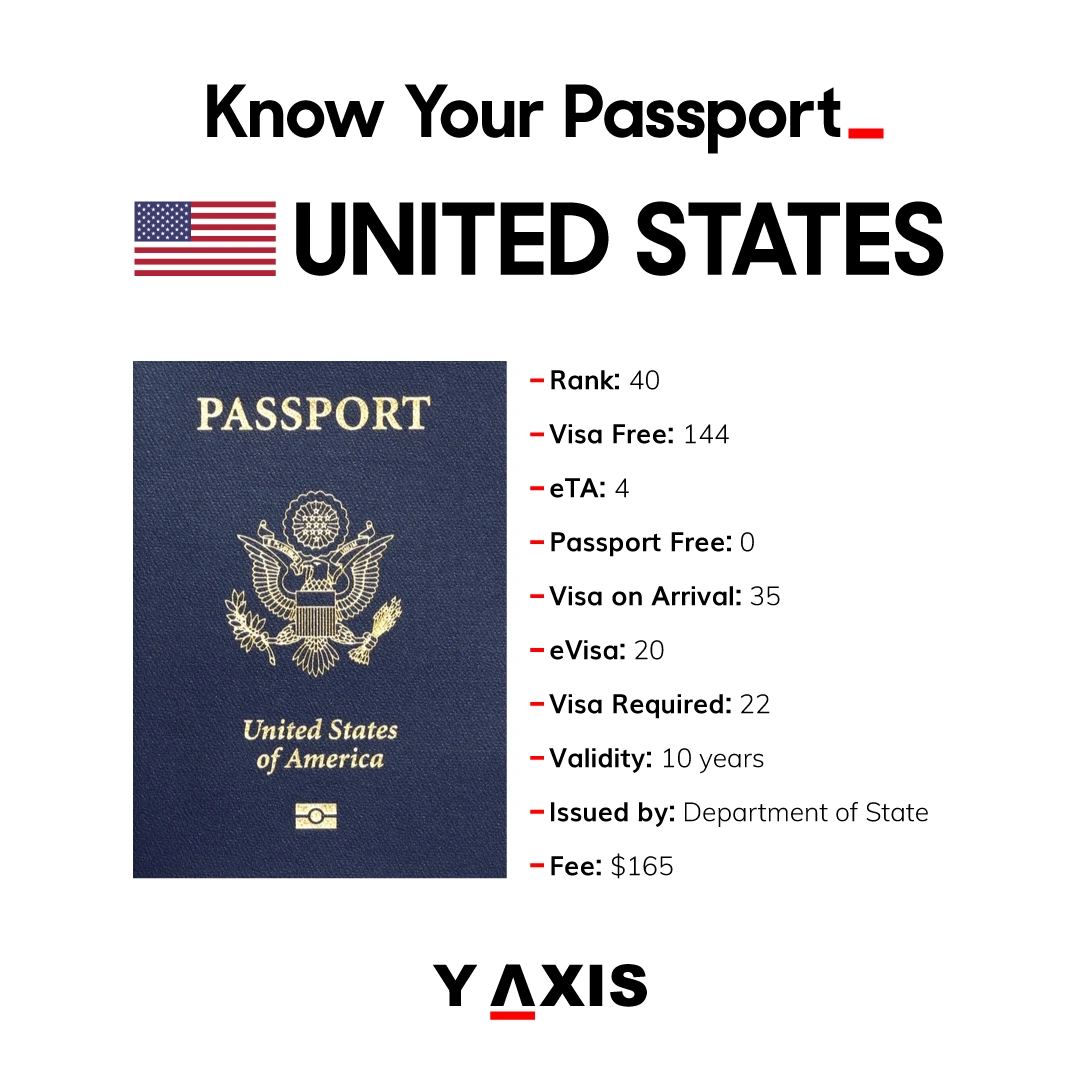
United States of America Passport free entry countries
United States of America Passport free entry countries
Highlights of the United States of America Passport
- United States of America grants you to go to 145 countries without a Visa.
- Visa on arrival for 39 countries for United States of America Passport holders in 2024
- Visit 6 countries you can visit with electronic travel authorization (eTA) with United States of America Passport in 2024
- Visit 17 countries you can visit with Visa Online countries with United States of America Passport in 2024
*Do you want to travel overseas? Get consultation from Y-Axis for expert guidance.
United States of America Passport ranking
The US ranks 7 by The Henley Passport Index. A country secures a high ranking by the virtue of its passport’s ability to work while visiting other countries without a visa. US passport holders can travel to 145 countries without a visa.
United States of countries America passport free entry countries in 2024
Here is a list of United States of America passport free entry countries in 2024:
|
List of United States of America passport free entry countries in 2024 |
||||
|
Albania |
Bulgaria |
Faroe Islands |
Iceland |
Mexico |
|
American Samoa |
Canada |
Fiji |
Ireland |
Micronesia |
|
Andorra |
Cayman Islands |
Finland |
Israel |
Moldova |
|
Angola |
Central African Republic |
France |
Italy |
Monaco |
|
Anguilla |
Chile |
French Guiana |
Jamaica |
Mongolia |
|
Antigua and Barbuda |
Colombia |
French Polynesia |
Japan |
Montenegro |
|
Argentina |
Cook Islands |
French West Indies |
Kazakhstan |
Montserrat |
|
Armenia |
Costa Rica |
Gabon |
Kiribati |
Morocco |
|
Aruba |
Croatia |
Georgia |
Kosovo |
Mozambique |
|
Austria |
Curacao |
Germany |
Kyrgyzstan |
Namibia |
|
Bahamas |
Cyprus |
Gibraltar |
Latvia |
Netherlands |
|
Barbados |
Czech Republic |
Greece |
Lesotho |
New Caledonia |
|
Belgium |
Denmark |
Greenland |
Liechtenstein |
Nicaragua |
|
Belize |
Dominica |
Grenada |
Lithuania |
North Macedonia |
|
Bermuda |
Dominican Republic |
Guam |
Luxembourg |
Northern Mariana Islands |
|
Bonaire, St. Eustatius and Saba |
Ecuador |
Guatemala |
Macao |
Norway |
|
Bosnia and Herzegovina |
El Salvador |
Guyana |
Malaysia |
Palau |
|
Botswana |
Estonia |
Haiti |
Malta |
Palestinian Territories |
|
Brazil |
Eswatini |
Honduras |
Marshall Islands |
Panama |
|
British Virgin Islands |
Falkland Islands |
Hong Kong |
Mauritius |
Paraguay |
|
Brunei |
St. Vincent and the Grenadines |
Hungary |
Mayotte |
Peru |
|
Philippines |
Suriname |
Trinidad and Tobago |
Sao Tome and Principe |
|
|
Poland |
Sweden |
Tunisia |
Senegal |
Uruguay |
|
Portugal |
Switzerland |
Turkey |
Serbia |
US Virgin Islands |
|
Puerto Rico |
Taiwan |
Turks and Caicos Islands |
Singapore |
Vanuatu |
|
Reunion |
Tajikistan |
Ukraine |
Slovakia |
Vatican City |
|
Romania |
Thailand |
United Arab Emirates |
Slovenia |
Wallis and Futuna |
|
Saint Kitts and Nevis |
|
United Kingdom |
South Africa |
Zambia |
|
Saint Lucia |
South Korea |
St. Helena |
St. Maarten |
St. Pierre and Miquelon |
|
San Marino |
Spain |
|
|
|
*Do you want to apply for jobs in USA? Get valuable advice from Y-Axis.
Countries for Visa on arrival for United States of America Passport holders in 2024
Here is a list of countries for Visa on arrival for United States of America Passport holders in 2024:
|
List of countries for Visa on arrival for United States of America Passport holders in 2024 |
||||
|
Bahrain |
Gambia |
Qatar |
Tonga |
Cape Verde |
|
Bangladesh |
Guinea-Bissau |
Rwanda |
Tuvalu |
Comoros |
|
Bolivia |
Indonesia |
Samoa |
Zimbabwe |
Egypt |
|
Burkina Faso |
Iraq |
Saudi Arabia |
Laos |
Ethiopia |
|
Burundi |
Jordan |
Seychelles |
Lebanon |
Solomon Islands |
|
Cambodia |
Kuwait |
Sierra Leone |
Madagascar |
Somalia |
|
Maldives |
Niue |
Mauritania |
Malawi |
Tanzania |
|
Tonga |
Oman |
Nepal |
Togo |
Timor-Leste |
List of electronic travel authorization (eTA) countries with United States of America Passport in 2024
Here is a list of electronic travel authorization (eTA) countries with United States of America Passport in 2024:
|
List of electronic travel authorization (eTA) countries with United States of America Passport in 2024 |
||||
|
Australia |
Kenya |
New Zealand |
Norfolk Island |
Pakistan |
|
Sri Lanka |
|
|
|
|
List of Visa Online countries with United States of America Passport in 2024
Here is a List of Visa Online countries with United States of America Passport in 2024:
|
List of Visa Online countries with United States of America Passport in 2024 |
||||
|
Azerbaijan |
Congo (Dem. Rep.) |
Papua New Guinea |
Guinea |
Papua New Guinea |
|
Benin |
Côte d’Ivoire (Ivory Coast) |
South Sudan |
India |
South Sudan |
|
Bhutan |
Djibouti |
Myanmar |
Uganda |
Nigeria |
|
Azerbaijan |
Congo (Dem. Rep.) |
Guinea |
||
|
Benin |
Côte d’Ivoire (Ivory Coast) |
India |
Countries that require Visa even if you have United States of America Passport
Here is a list of countries that require Visa even if you have United States of America Passport
|
List of countries that require Visa even if you have United States of America Passport
|
||||
|
Afghanistan |
China |
Ghana |
Nauru |
Sudan |
|
Algeria |
Congo |
Iran |
Niger |
Syria |
|
Belarus |
Cuba |
Liberia |
North Korea |
Turkmenistan |
|
Chad |
Eritrea |
Libya |
Russia |
Venezuela |
|
Mali |
Yemen |
|
|
|
|
|
|
|
|
|
|
|
|
|
|
|
Do you want to migrate to USA? Contact Y-Axis, the top-rated overseas immigration consultant. If you found this blog useful, go through this web-story: US Ambassador Eric praises India for its breakthroughs in health, technology and finance.
Posted on April 15 2024
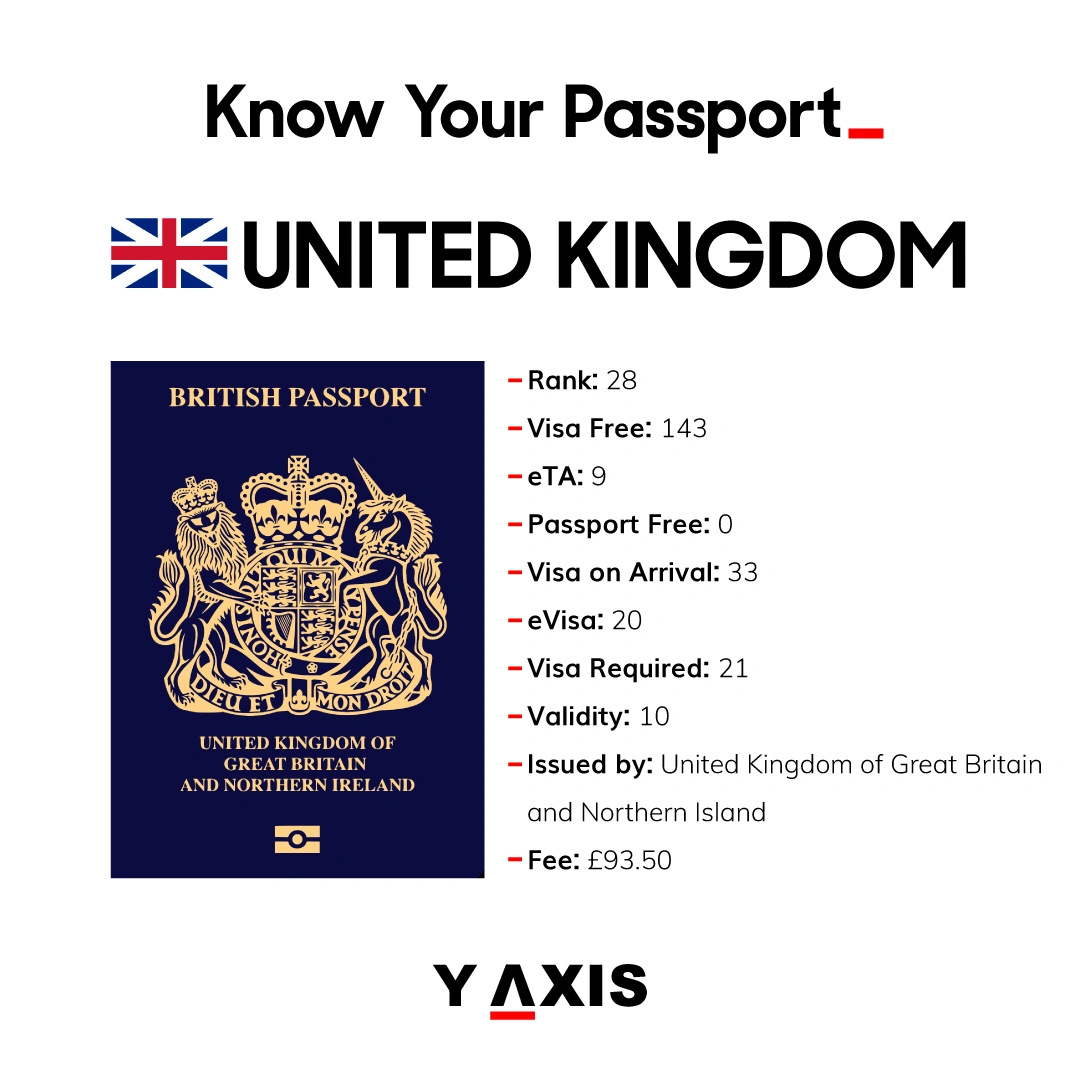
UK Passport visa free entry countries in 2024
UK Passport visa free entry countries in 2024
Highlights of the UK Passport
- UK Passport allows you to visit 145 countries without a Visa.
- Visa on arrival for 37 countries for UK Passport holders in 2024.
- Visit 11 countries with electronic travel authorization (eTA) with UK Passport in 2024.
- Visit 15 Visa Online countries with UK Passport in 2024.
*Want to Migrate to UK? Consult expert guidance from Y-Axis
UK Passport ranking
The UK passport gets a rank of 3 on The Henley Passport Index. The higher the passport rank, the more visa-free countries you can visit. The UK passport allows you to visit 193 countries visa-free.
UK passport free entry countries in 2024
Here is a list of UK passport free entry countries in 2024
|
List of UK passport free entry countries in 2024 |
||||
|
Albania |
Denmark |
Jamaica |
Northern Mariana Islands |
Slovenia |
|
Andorra |
Dominica |
Japan |
Norway |
South Africa |
|
Angola |
Dominican Republic |
Kazakhstan |
Palestinian Territories |
South Korea |
|
Anguilla |
Ecuador |
Kiribati |
Panama |
Spain |
|
Antigua and Barbuda |
El Salvador |
Kosovo |
Paraguay |
St. Helena |
|
Argentina |
Estonia |
Kyrgyzstan |
Peru |
St. Maarten |
|
Armenia |
Eswatini |
Latvia |
Philippines |
St. Pierre and Miquelon |
|
Aruba |
Falkland Islands |
Lesotho |
Poland |
St. Vincent and the Grenadines |
|
Austria |
Faroe Islands |
Liechtenstein |
Portugal |
Suriname |
|
Bahamas |
Fiji |
Lithuania |
Reunion |
Sweden |
|
Barbados |
Finland |
Luxembourg |
Romania |
Switzerland |
|
Belarus |
France |
Macao |
Rwanda |
Taiwan |
|
Belgium |
French Guiana |
Malaysia |
Saint Kitts and Nevis |
Thailand |
|
Belize |
French Polynesia |
Malta |
Saint Lucia |
Trinidad and Tobago |
|
Bermuda |
French West Indies |
Marshall Islands |
San Marino |
Tunisia |
|
Bolivia |
Gabon |
Mauritius |
Sao Tome and Principe |
Turkey |
|
Bonaire, St. Eustatius and Saba |
Gambia |
Mayotte |
Senegal |
Turks and Caicos Islands |
|
Bosnia and Herzegovina |
Georgia |
Mexico |
Serbia |
Ukraine |
|
Botswana |
Germany |
Micronesia |
Singapore |
United Arab Emirates |
|
Brazil |
Gibraltar |
Moldova |
Slovakia |
Uruguay |
Visa on arrival countries for UK Passport holders in 2024
Here is a list of Visa on arrival countries for UK Passport holders in 2024:
|
List of Visa on arrival countries for UK Passport holders in 2024 |
||||
|
Bahrain |
Ethiopia |
Malawi |
Saudi Arabia |
Tajikistan |
|
Bangladesh |
Guinea-Bissau |
Maldives |
Seychelles |
Tanzania |
|
Burkina Faso |
Indonesia |
Mauritania |
Sierra Leone |
Timor-Leste |
|
Burundi |
Iraq |
Nepal |
Solomon Islands |
Togo |
|
Cambodia |
Jordan |
Niue |
Somalia |
Tonga |
|
Comoros |
Kuwait |
Lebanon |
Oman |
Tuvalu |
|
Egypt |
Laos |
Madagascar |
Palau |
Zimbabwe |
List of electronic travel authorization (eTA) countries with UK Passport in 2024
Here is a list of electronic travel authorization (eTA) countries with UK Passport in 2024:
|
List of electronic travel authorization (eTA) countries with UK Passport in 2024 |
||||
|
American Samoa |
Canada |
New Zealand |
Pakistan |
Sri Lanka |
|
Australia |
Kenya |
Norfolk Island |
Puerto Rico |
United States of America |
List of Visa Online countries with UK Passport in 2024
Here is list of Visa Online countries with UK Passport in 2024
|
List of Visa Online countries with UK Passport in 2024 |
||||
|
Azerbaijan |
Cameroon |
Djibouti |
India |
Papua New Guinea |
|
Benin |
Congo (Dem. Rep.) |
Equatorial Guinea |
Myanmar |
South Sudan |
|
Bhutan |
Côte d’Ivoire (Ivory Coast) |
Guinea |
Nigeria |
Uganda |
|
Azerbaijan |
Cameroon |
Djibouti |
India |
Papua New Guinea |
Countries that require Visa even if you have UK Passport
Here is a list of Countries that require Visa even if you have UK Passport:
|
List of Countries that require Visa even if you have UK Passport |
||||
|
Afghanistan |
China |
Liberia |
North Korea |
Chad |
|
Algeria |
Congo |
Libya |
Russia |
Turkmenistan |
|
Central African Republic |
Cuba |
Mali |
Sudan |
Yemen |
|
Eritrea |
Ghana |
Nauru |
Niger |
Syria |
Posted on April 15 2024
Trending Article
Posted On April 26 2024
What are the benefits of working in Singapore?